Latin America Advisor | Q&A on What's at Stake for Mexico in the USMCA Review

Q: Mexico’s government expects a review of the U.S.-Mexico-Canada Agreement (USMCA) to begin this September or October, instead of as scheduled in July 2026, Economy Secretary Marcelo Ebrard said. U.S. President Donald Trump has called for the agreement, which he negotiated during his first term in office, to be reworked. What is the significance of an early renegotiation of the USMCA, and how might it affect the consultation process’ outcome? How might non-trade-related factors like migration play into a new agreement? How feasibly could the agreement be significantly reduced in scope?

A: Since re-entering the Oval Office, U.S. President Donald Trump has signaled he would seek an early review of USMCA, and the fact that his administration’s first tariff tussles were with Canada and Mexico only underscored the potential. That explains why Secretary Ebrard, who has said he visits Washington every 10 days for meetings, indicated the possible ahead-of-schedule arrival of talks with little surprise, even suggesting the move could help calm investor and consumer nerves. Indeed, Mexico has come out of recent months’ upheaval on surer footing than most U.S. trade partners, thanks in part to USMCA protections.

That doesn’t mean the path ahead will be smooth, and Trump recently hinted the North American pact could face termination. The talks must be seen in the larger context of other U.S. government priority areas, notably China, immigration, and security.

President Claudia Sheinbaum, who has had at least seven phone calls with Trump as of May 23, is drawing accolades at home and abroad for calmly weathering Washington’s tariff threats, but recent events expose the delicate nature of ties. For example, days after Sheinbaum rebuffed Trump’s suggestion to send U.S. troops into Mexico to battle organized crime groups, the United States revoked the visas of a Mexican border-state governor and her spouse—both members of the ruling party. Scant reasons were given, and concerns persist that other high-profile Mexican officials could also see their visas revoked. On the other hand, U.S. Secretary of State Marco Rubio’s recently praised Mexico’s security collaboration. In the months ahead, we should expect this bilateral balancing act to continue.
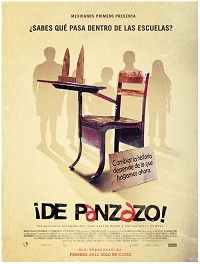
AS/COA Online | Exclusive Interview: Juan Carlos Rulfo and Daniela Alatorre on the Making of ¡De Panzazo!

As the documentary ¡De Panzazo! explains, Mexico is the OECD member that spends the most on education in terms of public spending, yet its education system ranks last in terms of quality. ¡De Panzazo! (Barely Passing) director Juan Carlos Rulfo and producer Daniela Alatorre spoke with AS/COA Online’s Carin Zissis after the film’s New York premiere on June 4 at Americas Society. With the support of civil society group Mexicanos Primero, the documentary calls for quality education and teacher evaluations in Mexico. Rulfo and Alatorre explain how they became involved in the project, involving Mexican students in the film’s production, the need to share best educational practices on an international level, and the impact of the film during a Mexican election year.

AS/COA Online: As the film implies, Mexico’s educational challenges have a long history. What sparked the making of the film now?
 
Alatorre: So this was a process of three years. Mexicanos Primero had been working at least for three years, so that makes it six now. And they thought they needed to do something big that could talk to a broader audience. And so they talked to [Mexican news anchor] Carlos Loret. Then they said: “Why don’t we do a series of TV shows?”
Read More

AS/COA Online | Interview: Mexican Undersecretary for Foreign Relations Lourdes Aranda

Mexican Undersecretary for Foreign Relations Lourdes Aranda discusses her country’s role as this year’s G20 host. Aranda, who serves as a G20 representative, explained why Mexico's role in guiding the G20 agenda toward achieving goals in the areas of green growth, food security, and economic stability.

Video edited by David Gacs.

AS/COA Online Exclusive Interview: Costa Rica’s Education Minister Leonardo Garnier on Innovations in Teaching

“[T]he central strategy we have followed is not just to have more students, but to offer a more relevant, significant education.”


Costa Rica’s high literacy rate has long made its educational system the envy of the Americas. Still, high school enrollment and access to higher education remain tough challenges in the Central American country. Costa Rican Education Minister Leonardo Garnier spoke with AS/COA Online’s Editor-in-Chief Carin Zissis, not only about how his country is fighting dropout rates, but also how new teaching approaches and technology can play a role in boosting education. Garnier says that changes underway offer “more relevant, more significant, and more entertaining education so that kids will stay in high school—but they will stay for a good reason, not just for staying there.”

AS/COA Online: With a 96 percent literacy rate, one of Latin America’s highest, many see Costa Rica’s education system as a model for other countries in the region. What models in other parts of the world do you look to for inspiration and ideas?

Garnier: Well, I don’t see Costa Rica as a model. I think we have done some things that have been useful for us, but still, we have a lot of problems. When we look at other countries, for example, the things that small countries like Finland have done with education, certainly there is big room for improvement in our system.

Read More